
Look Closer: The Extraordinary Signs of Allah in Creation
From Earth’s atmosphere to rain and the unseen processes inside your body, discover remarkable systems the Quran invites you to notice.
4 min read
Your heart has been beating through the night. Your body has been regulating its temperature and blood sugar. You did not have to give a single instruction.
Outside, Earth keeps turning. Sunlight reaches oceans and forests, water rises into clouds and returns as rain.
Much of this becomes ordinary because we live with it every day.
But the Quran invites us to look more closely, and to recognize the signs of Allah, our Rabb, who creates and sustains us.
Look at the sky. Then look again.
In Surah Al-Mulk 67:3–4, Allah invites us to look again at the heavens and reflect on their creation. The passage is not an astronomy formula. It is an invitation to pay attention.
ٱلَّذِي خَلَقَ سَبۡعَ سَمَٰوَٰتٖ طِبَاقٗاۖ مَّا تَرَىٰ فِي خَلۡقِ ٱلرَّحۡمَٰنِ مِن تَفَٰوُتٖۖ فَٱرۡجِعِ ٱلۡبَصَرَ هَلۡ تَرَىٰ مِن فُطُورٖ ٣
“˹He is the One˺ Who created seven heavens, one above the other. You will never see any imperfection in the creation of the Most Compassionate. So look again: do you see any flaws?”
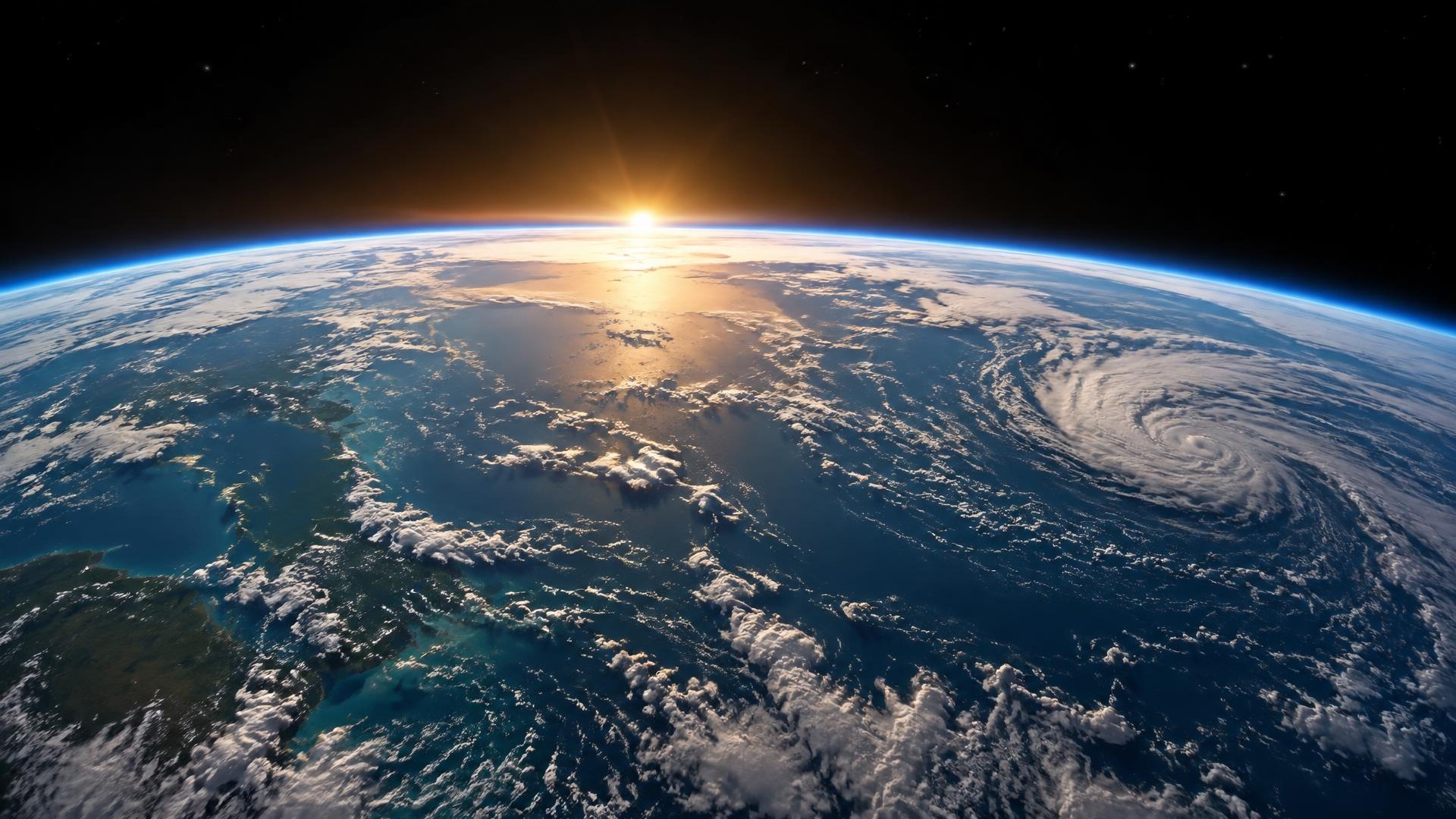
Consider the conditions that make life on Earth possible. Our planet receives energy from the Sun, while its atmosphere helps moderate temperature, protects life from some harmful radiation and supports the water cycle.
Earth also travels around the Sun at a distance where liquid water can remain on the surface under suitable atmospheric conditions. Astronomers call this the habitable zone. Distance alone is not enough; the atmosphere and the planet's other characteristics matter.
What we overlook as a familiar blue sky is part of an extraordinary environment that helps sustain life.
Follow a single drop of rain.
In Surah Ar-Rum 30:48, the Quran describes winds, the movement and gathering of clouds, and rain emerging from them. It draws our attention to a process we watch without always noticing.
ٱللَّهُ ٱلَّذِي يُرۡسِلُ ٱلرِّيَٰحَ فَتُثِيرُ سَحَابٗا فَيَبۡسُطُهُۥ فِي ٱلسَّمَآءِ كَيۡفَ يَشَآءُ وَيَجۡعَلُهُۥ كِسَفٗا فَتَرَى ٱلۡوَدۡقَ يَخۡرُجُ مِنۡ خِلَٰلِهِۦۖ فَإِذَآ أَصَابَ بِهِۦ مَن يَشَآءُ مِنۡ عِبَادِهِۦٓ إِذَا هُمۡ يَسۡتَبۡشِرُونَ ٤٨
“It is Allah Who sends the winds, which then stir up ˹vapour, forming˺ clouds, which He then spreads out in the sky or piles up into masses as He wills, from which you see rain come forth. Then as soon as He causes it to fall on whoever He wills of His servants, they rejoice,”
Sunlight helps water evaporate. Water vapour cools and condenses into droplets. Clouds form, and rain eventually falls when droplets or ice particles grow large enough.
Rain feeds rivers and soil. Plants take up water; animals depend on plants or other animals. In forests, tiny organisms break down dead matter, returning nutrients to the soil.
These connections are constantly changing and can be disrupted. Their wonder is not that nothing ever goes wrong, but that so many processes and relationships make life possible in the first place.
The next time rain falls, it may no longer seem like just weather.
Inside you, an unseen world never stops working.
Surah Al-Infitar 82:6–8 calls human beings to consider the Lord who created, fashioned and proportioned them. This is not a physiology lesson. It asks us to notice our own creation.
ٱلَّذِي خَلَقَكَ فَسَوَّىٰكَ فَعَدَلَكَ ٧
“Who created you, fashioned you, and perfected your design,”
After a meal, blood glucose generally rises. The pancreas releases insulin, helping cells take up glucose. Between meals, glucagon signals the liver to release glucose so the body continues receiving energy.
If you become hot, sweating and changes in blood flow can help release heat. If cold, the body conserves heat and may shiver. You do not consciously direct all these responses.
When these systems malfunction, people can become ill. The point is not that human bodies are infallible. It is how much is happening within us every moment without our command.
Even within one ordinary human body, there is a world worth discovering.
Signs of the Creator in every creation
Surah Adh-Dhariyat 51:20–21 directs our attention to signs on Earth and within ourselves. The Quran does not ask us to stop at the names of natural processes. It invites us to recognize signs of the One who created them.
وَفِي ٱلۡأَرۡضِ ءَايَٰتٞ لِّلۡمُوقِنِينَ ٢٠ وَفِيٓ أَنفُسِكُمۡۚ أَفَلَا تُبۡصِرُونَ ٢١
“There are ˹countless˺ signs on earth for those with sure faith, as there are within yourselves. Can you not see?”
A sky we have seen a thousand times. Rain on the window. A heartbeat continuing as we sleep. These are easy to overlook because they are familiar.
Learning how they work does not make them less astonishing. It gives us more to notice.
Look closely at what Allah has created. Let that knowledge deepen awe, humility and gratitude to our Rabb.
Every creation offers a reason to reflect on its Creator.
Share this article
Published
Sources & references
- Surah Al-Mulk : 3–4
- Surah Ar-Rum : 48
- Surah Al-Infitar : 6–8
- Surah Adh-Dhariyat : 20–21
- NASA: The habitable zone
- NASA: Earth’s atmosphere
- USGS: The water cycle
- NIDDK: Endocrine diseases
- NIDDK: Insulin, glucagon and blood glucose
- OpenStax: Energy and heat balance
- OpenStax: Nutrient cycles and decomposition
- Hero: AI-generated Earth sunrise illustration, not a documentary photograph.
Related discoveries

The Same Quran. Why Does It Change Some Hearts but Not Others?
Two people can hear the same Quranic verse. One decides to change. The other continues as before. An early Muslim scholar found a remarkable explanation in a verse about plants receiving the same water.
The Prophet ﷺ Didn't Just Recite the Quran. He Responded to It.
A remarkable account of the Prophet's night prayer offers one simple question to ask whenever you understand an ayah.

I Know What’s Right. Why Is It Still So Hard?
Sometimes, the most meaningful thing you do for Allah is something you choose not to do.